

The plain answer
What is a family care home?
Most people have never heard the term until the week they need one. Here’s the plain answer.
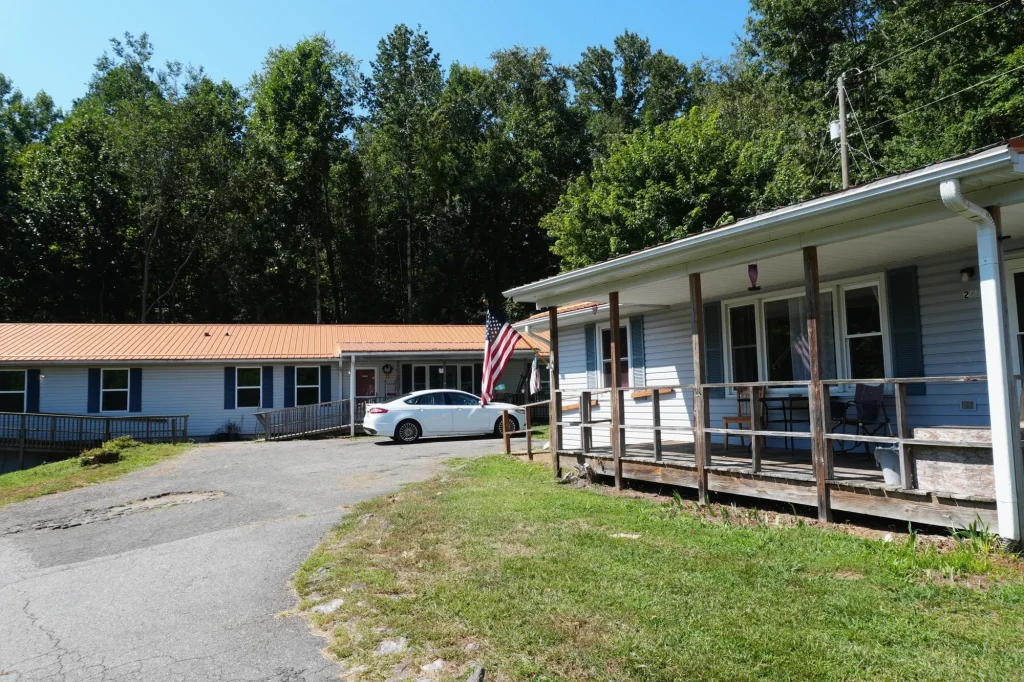
- Two to six adults
- Licensed and inspected by the State of North Carolina
- A house, not an institution
The short version
A family care home is a licensed home where two to six adults live and get help with daily life around the clock. It’s a house — usually an ordinary house on an ordinary residential street. It’s licensed and inspected by the State of North Carolina.
It is not a nursing home, not a hospital, and not an institution.
It’s legally a house
North Carolina doesn’t classify a family care home as an institution. State law treats it as a residential use of property — which means it belongs in a residential neighborhood, and a neighborhood can’t write rules to keep one out.
That isn’t a technicality. It’s the whole idea. People live in houses.
Who lives in one
A family care home isn’t a home for old people.
It’s a home for people who need one.
- Older adults who need supervision but not skilled nursing care
- Adults living with serious mental illness — often people leaving a hospital with nowhere to go
- Adults with intellectual and developmental disabilities
- Adults living with a brain injury
- Adults in their forties and fifties on disability
Who can’t
Being honest about this matters as much as anything else on this page. A family care home can’t take someone who needs continuous licensed nursing care, or who is ventilator-dependent, or whose doctor says this isn’t the right setting for them.
If that’s your situation, we’d rather tell you on the phone than after you’ve driven out here.
- Licensed by the North Carolina Division of Health Service Regulation
- Monitored by the county department of social services at least four times a year
- Surveyed annually by the state
- Inspected by the fire marshal and the health department
Money
What it costs, and who pays
Two separate things get paid for, by two different programs. It confuses almost everybody, so here it is plainly.
Room and board — the room, the meals, the utilities, keeping the house running — is covered for eligible residents by State-County Special Assistance. In 2026 that rate is $1,397 a month. The resident puts most of their own income toward it and keeps $70 a month for themselves.
Hands-on care — help bathing, dressing, moving around, managing medications — is paid separately through Medicaid, by the hour, for the hours a nurse assessor approves.
If someone doesn’t qualify for Special Assistance, private pay is [$X] a month.
Special Assistance rate from the NC DHHS Special Assistance Manual (January 2026). Re-check it every January — it changes with the Social Security COLA.
How someone qualifies for Special Assistance
The application goes through the county department of social services. We’ll walk you through all of it.
Nobody should have to figure this out alone at the worst week of their life.
- Age 65 or older, or 18–64 with a Social Security disability determination
- Countable income at or under about $1,467 a month (2026)
- Countable assets under about $2,000
- A doctor completes a form — an FL-2 — confirming they need this level of care
- Living in a licensed home approved to receive Special Assistance. Ours are.

Side by side
How it compares
| Family care home | Assisted living | Nursing home | |
|---|---|---|---|
| How many people | 2–6 | Often 40–150 | Often 100+ |
| What it is | A house on a street | A building | A medical facility |
| Level of care | Personal care & 24-hr supervision | Personal care & 24-hr supervision | Skilled nursing |
| Typical NC cost | $1,397/mo if SA-eligible | ≈$6,496/mo private pay | ≈$9,733/mo semi-private |
Special Assistance rate from the NC DHHS Special Assistance Manual (January 2026). Assisted living and nursing home medians from 2025 CareScout survey data. Re-check the Special Assistance rate every January — it changes with the Social Security COLA.
Still not sure
The fastest way to understand one is to stand in one.
Call and come look. Any day, no appointment. Walk through the whole house, meet whoever’s on shift, ask us anything you want.