

Why we do it differently
Three things about this place that surprise people.
None of them are marketing. Each one started as a practical answer to a real problem — and each one turned out to be good for the people who live here.
One — children at work
Our caregivers bring their children to work.
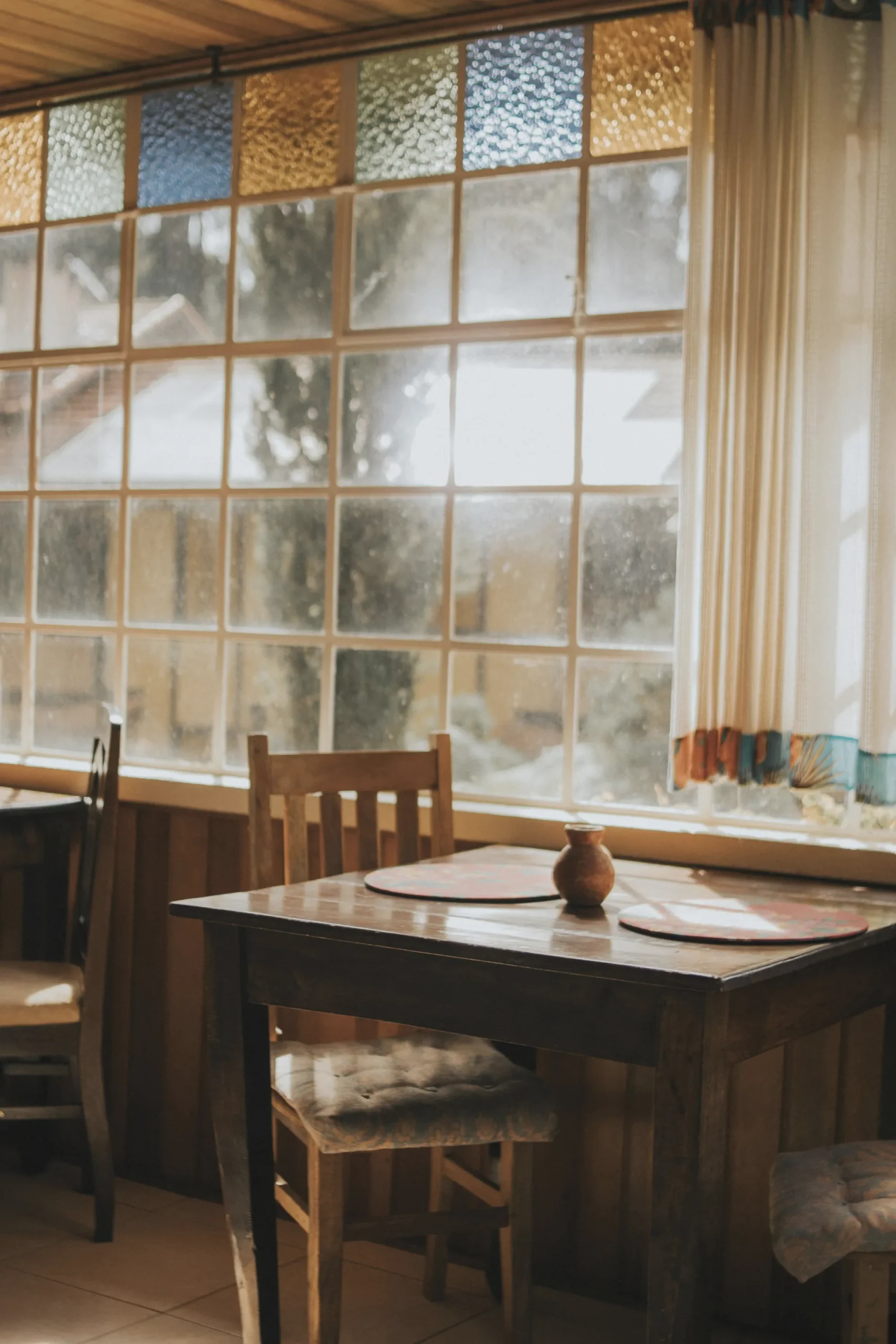
The first time a visitor sees a nine-year-old doing homework at the kitchen table, they usually stop and stare.
Here's how it happened. Caregiving is hard work, done mostly by women, and it doesn't pay what it should. Child care costs what it costs. The most common reason a shift went uncovered here was never that somebody quit — it was that somebody's child care fell through at six in the morning and she had a five-year-old and no options.
So we stopped making people choose. Bring the kid.
What we didn't expect was what it did to the houses. A home with a child in it is a different place. There's somebody to show a drawing to. There's noise in the afternoon. People who hadn't been getting out of their chair much started getting out of their chair.
Our residents don't tolerate the children. They wait for them.
Nobody should have to choose between their own child and somebody else's parent.
Two — staff housing
Our staff can live where they work.
[Asheville] is an expensive place to live, and caregiving does not pay like an expensive place to live. That's not a complaint, it's arithmetic. Somebody who's genuinely good at this — the kind of person you want with your mother at three in the morning — often can't afford to live anywhere near the people she takes care of.
So we made housing part of the deal. It's an option, never a requirement. No commute, no gas money, no scrambling when the car won't start or the road washes out.
We didn't do it to be generous. We did it for what it buys the people who live here: the same face, every morning, for years.
In this industry people leave constantly, and every time somebody leaves, a resident loses a person who knew them. Knew she doesn't like being woken suddenly. Knew he goes quiet before he gets upset. Knew what her good days look like, so they can tell when it's a bad one.
You can't write that into a care plan. It only comes from time.
Keeping our people is how we take care of our residents. Everything else is downstream of that.
Three — charity beds
We have kept people nobody was paying for.
The system that funds this care is more fragile than people realize. A Social Security raise pushes somebody a dollar over the income limit and their assistance stops entirely. A doctor's form expires. An application sits somewhere for two months. A hospital discharges somebody on a Friday afternoon with nowhere to go.
In every one of those situations there is an actual person, and the paperwork is going to take weeks.
We've kept people. Since [year], we've provided [N] days of housing and care to people no program was paying for. Some of them were here for months while it got sorted out. Some of it never got sorted out.
We don't say that to ask for credit. We say it because when people ask what kind of place this is, that's the honest answer.
Come and look
The best way to understand a house is to walk into one.
Any day, no appointment. Walk through the whole house, meet whoever is on shift, and ask us anything you want.